Nara Shrines: Kasuga Taisha Shrine 春日大社
Kasuga Taisha (Kasuga Grand Shrine) is the most important Shinto shrine in Nara.
Located west of Nara Park and Kofukuji and close to Todaiji Temple and Wakakusayama, the shrine along with nearby Kasugayama Primeval Forest are designated as a joint UNESCO World Heritage Site.

History
Founded in 768, the shrine served as the tutelary shrine of the powerful Fujiwara family. The Fujiwara were Japan’s most powerful clan during the Nara and Heian periods. They provided many regents to young emperors and married their daughters in to the imperial line.
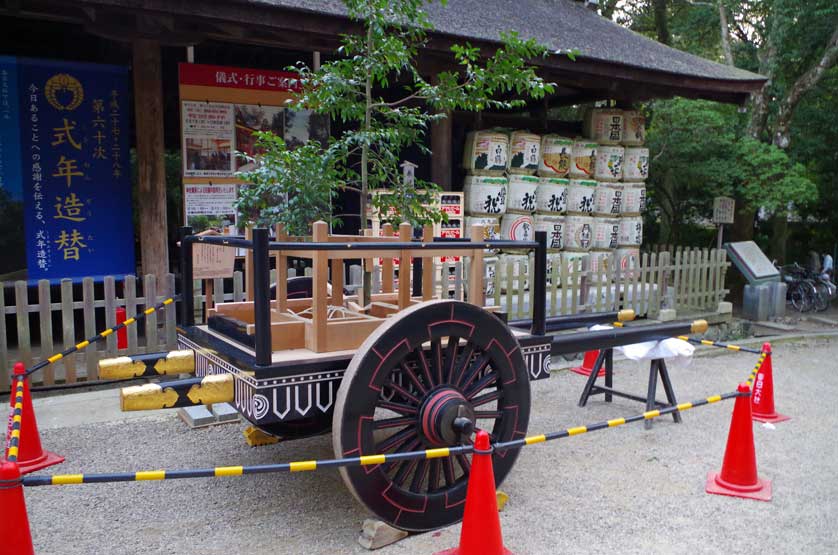
As with the Ise Grand Shrine in Mie, Kasuga Shrine was rebuilt every 20 years. Although this practice was finally discontinued at the end of the Edo Period.
The four shrine buildings of the inner sanctum of Kasuga Taisha enshrine the kami Futsunushi-no-mikoto and Takemikazuchi-no-mikoto as well as Amenokoyane-no-mikoto, a mythical ancestor of the Fujiwara and his consort Hime-Okama.
Kasuga Taisha Buildings
Kasuga Taisha includes the four shrines of the main inner sanctum, which has an admission charge to enter, as well as a number of sub-shrines scattered through the surrounding woodlands, which are free to enter.
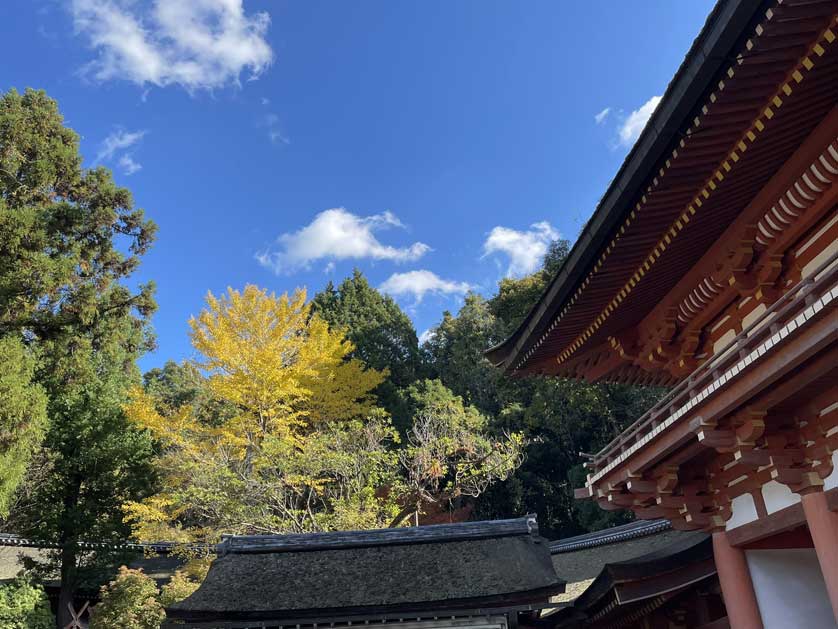
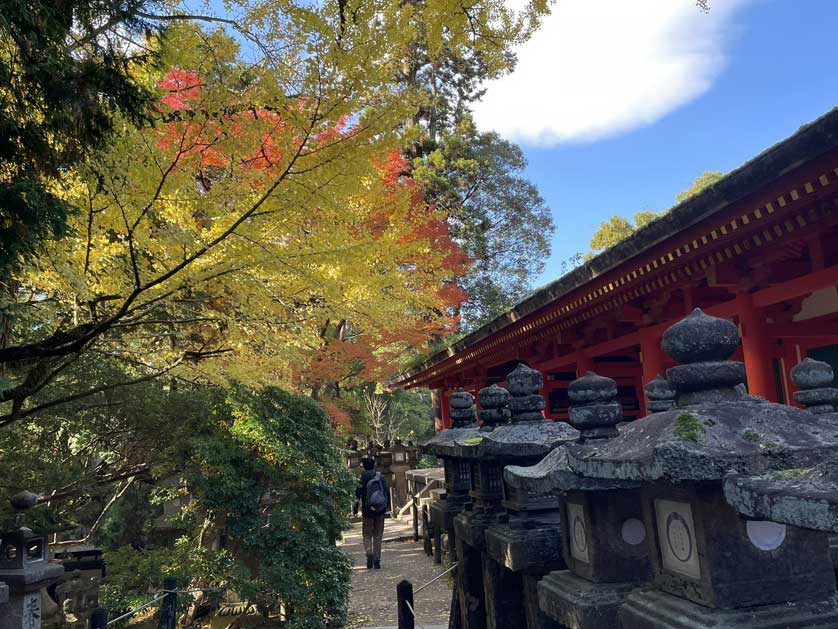
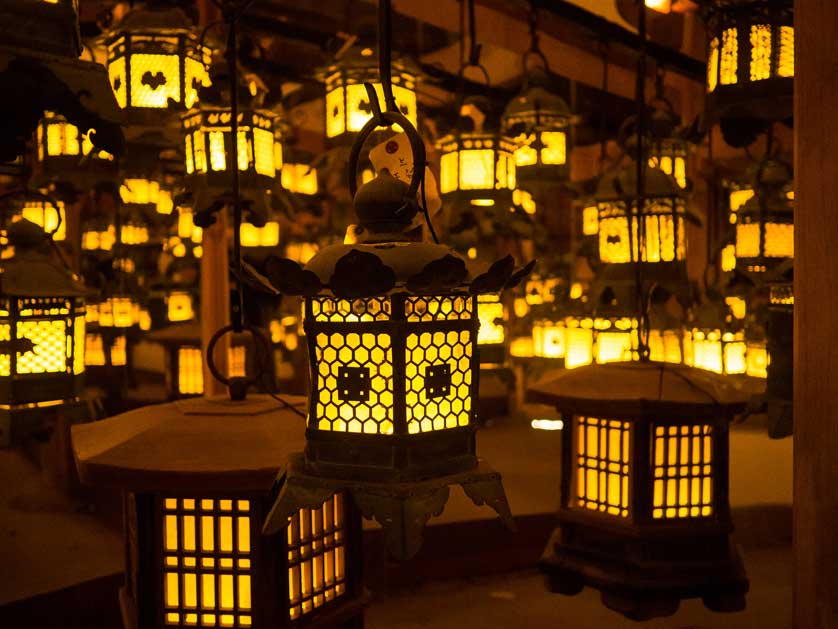
The inner shrine of Kasuga Taisha consists of four separate shrines. They are surrounded by a gallery, and dedicated to the kami listed above. They are all painted in bright vermilion. The eaves of the buildings are decorated with as many as a thousand bronze hanging lanterns. The sloping roofs are made from cypress bark. They overhang the structures in an eponymous style of architecture known as kasuga-zukuri.
Stone Lanterns
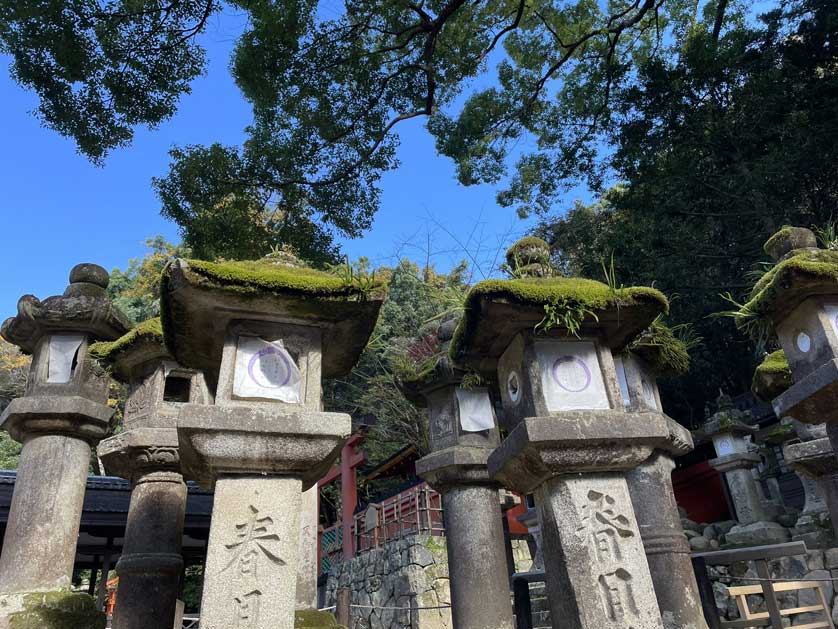
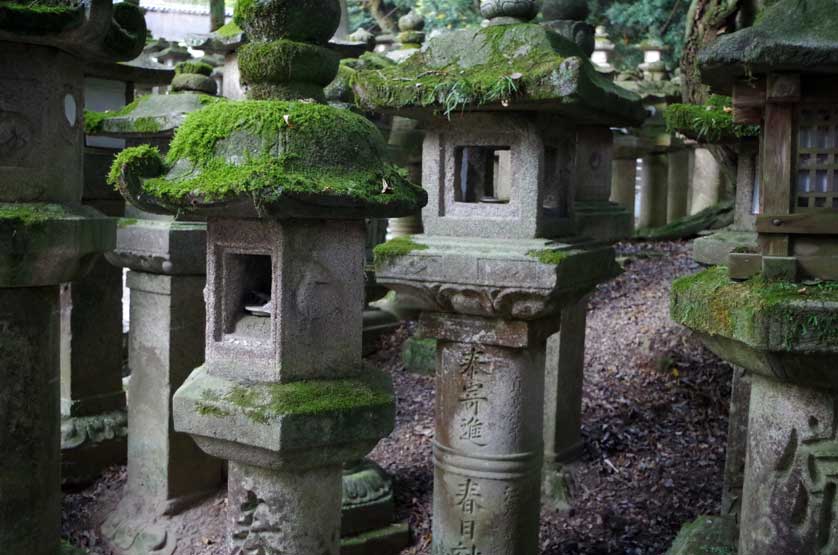
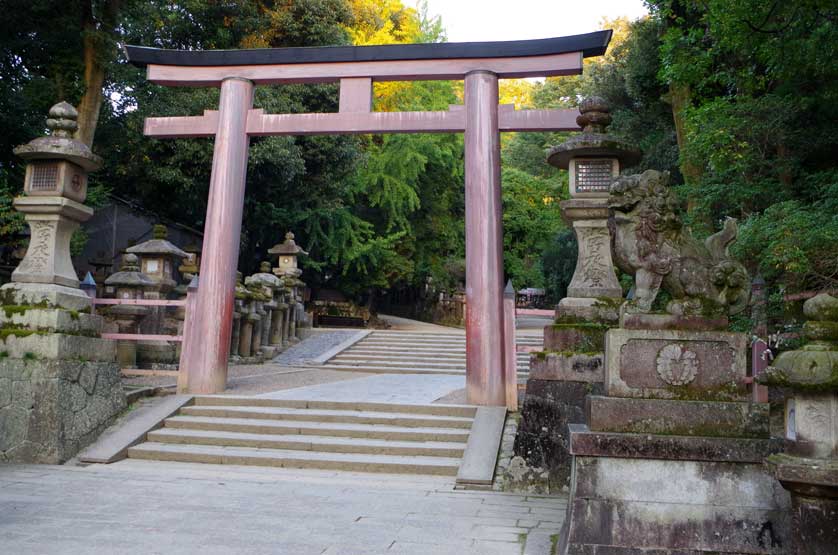
Kasuga Taisha is known for its stone lanterns and there are believed to be over 3,000 of them in the shrine precincts, many of them evocatively covered in moss. They are lit twice a year during the nights of the Mandoro festivals in February and August.
The Heiden (Offering Hall) and Naoraiden (Entertainment Hall) just outside the inner sanctum date from 1650.
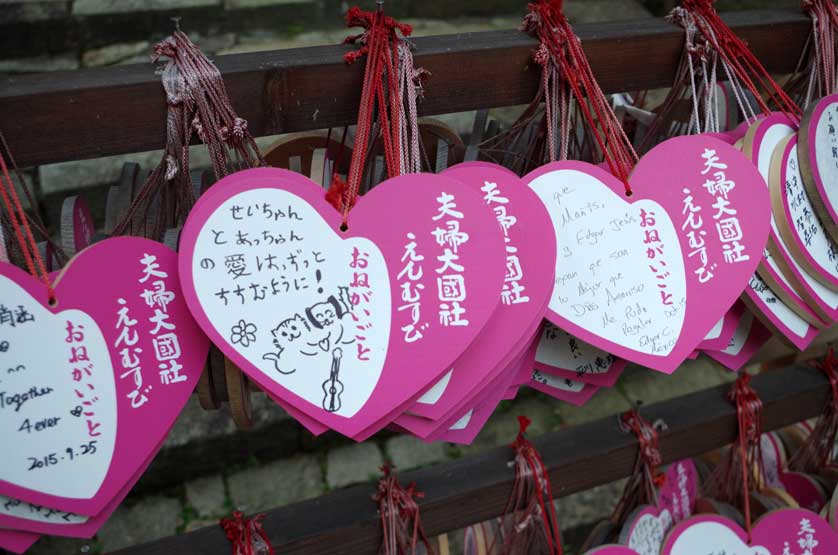
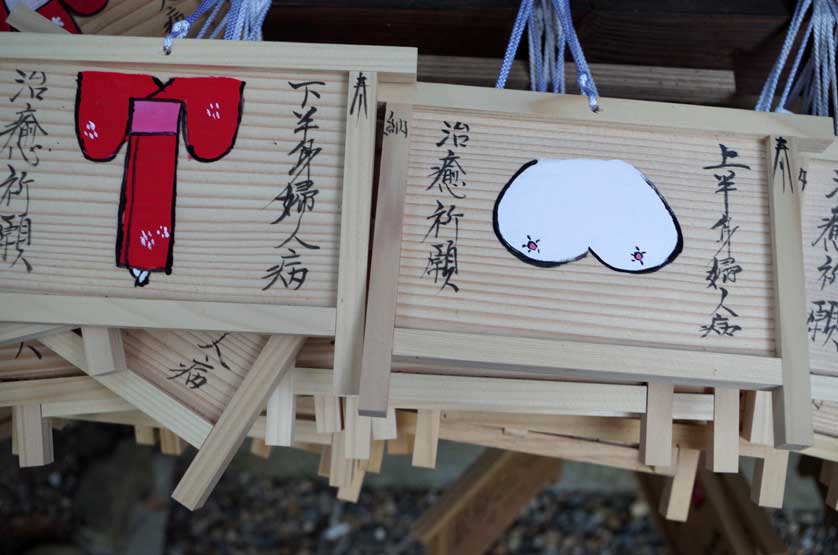
The sub-shrines of Kasuga Taisha include Akachichi Shirochichi Shrine, a shrine for prayers for curing women’s diseases and Wakamiya Shrine known for its dance festival. This is the On-Matsuri, held over 4 days in December around 15th-18th with performances of kagura enacted by shrine maidens or miko and a procession in historical costumes. Meoto Daikokusha enshrines married deities and is popular with couples hoping for a happy marriage.
Homotsuden Treasure House
Kasuga Taisha’s Homotsuden Treasure House near the main complex displays the historical relics of the shrine including two large, decorated drums, mirrors, swords, and bows and arrows displayed during the Kasuga Matsuri (below).
Kasuga Matsuri aka Monkey Festival held on March 13 is the main festival of the shrine. It features a colorful parade and bugaku and gagaku dance performances.
The Kasuga Taisha Shinen Manyo Botanical Garden grows around 250 plants and flowers mentioned in the Manyoshu, Japan’s oldest collection of poetry. The garden is particularly known for its wisteria in season.
Address & Hours
Kasuga Taisha (kasugataisha.or.jp)
160 Kasugano-cho
Nara 630-8212
Tel: 0742 22 7788
Hours: April – September 6 am-6 pm; October – March: 6.30 am-5 pm; Main Sanctuary 8 am-4 pm; Homotsuden Treasure House & Shinen Manyo Botanical Garden 9 am-5 pm
Admission: 500 yen for the inner shrine; 500 yen for the Shinen Manyo Botanical Garden; 400 yen for the Treasure House.

Access – how to get to Kasuga Taisha
Kasuga Taisha is east of Kofukuji and the Nara National Museum in Nara Park. It is also a short walk south east from the Nigatsudo and Sangatsudo halls of Todaiji.
Additionally, the shrine is a 30 minute walk from Kintetsu Nara Station. However, it is a lengthy 45 minute walk from JR Nara Station. Nara Kotsu buses run to the shrine from both stations including the #70 and #97; get off at Kasuga Taisha Honden bus stop.
From the historic Nara Hotel the shrine is just a 7 minute walk.
Opening hours are 8 am-4.30 pm or 5 pm daily from November to March and 7 am-5 pm or 5.30 pm April-October.
Book Hotel Accommodation in Nara
Find & Book Hotels in Nara
The Nara Hotel
Hotel Fujita
Shrines in Japan
Gallery of Photographs